
Feb 1, 2026
The Hybrid Revolution: How AI Can Save Traditional Film Businesses
Why prop houses and rental companies must embrace digital asset creation to survive
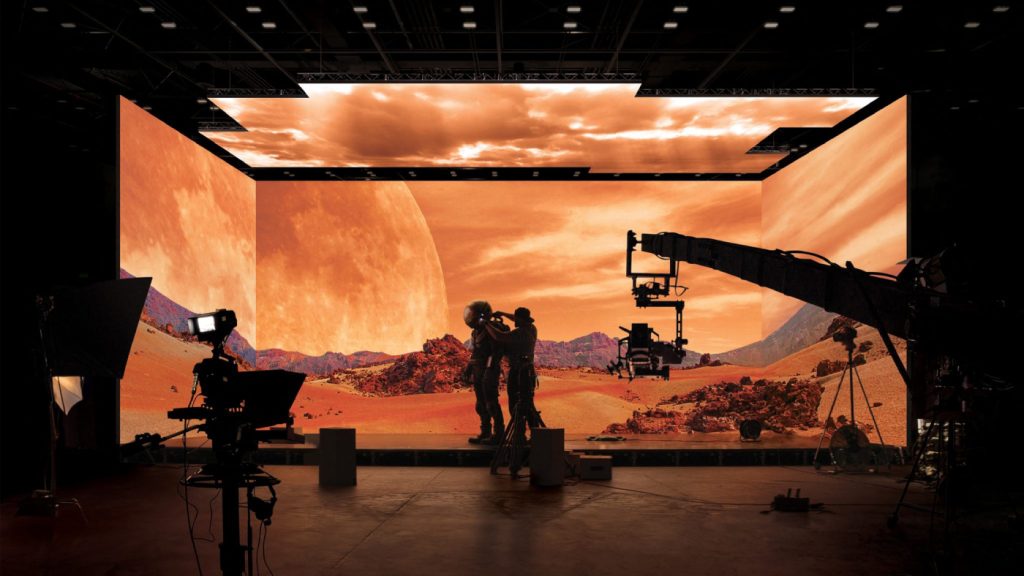
Whilst Hollywood debates the politics of diversity programmes and studios navigate Trump's tariff threats, a quieter revolution is reshaping the infrastructure of film and television production. And it has nothing to do with politics—it has everything to do with survival.
Traditional production service businesses—prop houses, equipment rental companies, set builders—are facing an existential crisis. Eight camera rental companies folded in a single year. Prop shops are closing across Los Angeles. As one rental company director put it bluntly: "You're the only rental company left—you HAVE to survive!"
But here's what most aren't seeing: the same technology threatening these businesses could save them. AI-powered digital asset creation isn't just disrupting traditional production—it's creating an entirely new market that traditional businesses are perfectly positioned to dominate.
If they move quickly.
The Virtual Production Boom Nobody Prepared For
The numbers tell the story. The global LED video wall market for virtual production hit $311 million in 2024 and is projected to reach $800 million by 2025, growing at 18% annually through 2033. Virtual production isn't coming—it's here.
Productions ranging from The Mandalorian to Taylor Swift concert films are shooting against LED volumes displaying photorealistic 3D environments. NantStudios just built the world's largest LED volume: 101ft wide × 124ft long × 39ft high. Thailand is offering rebates to attract virtual production. Southeast Asia's virtual production sector is booming.
But here's the problem: whilst LED wall manufacturers are thriving, the companies that supply what goes ON those walls—the digital environments, props, and assets—are scrambling to keep up.
Traditional prop houses have warehouses full of physical assets perfected over decades. Art department firms know exactly what a 1940s telephone looks like, how period furniture should be aged, which fabrics photograph well under tungsten versus LED lighting.
That expertise is invaluable. But it's increasingly irrelevant if it only exists in physical form.
The Market Disconnect
Virtual production requires:
High-resolution 3D models of props and environments
Physically accurate materials and textures
Assets optimised for real-time rendering in Unreal Engine
Libraries organised for rapid deployment during prep
Technical knowledge about how digital assets perform under virtual lighting
Traditional rental houses offer:
Decades of curatorial expertise
Deep knowledge of period accuracy and styling
Relationships with art departments and production designers
Warehouses full of unique, characterful objects
Understanding of what works on camera
The disconnect is obvious. And it's creating a massive opportunity.
The Hybrid Model: Physical + Digital
Here's my prediction: within three years, the most successful production service companies will be hybrid operations offering both physical and digital assets.
Imagine this workflow:
Phase 1: Catalogue Existing Inventory A prop house has 10,000 physical items. Using photogrammetry and AI-assisted 3D modelling (tools like Tripo AI, Meshy, or Kaedim), they digitise their entire catalogue. Not manually—AI does the heavy lifting.
Recent breakthroughs in 2025 mean text-to-3D and image-to-3D tools now create production-ready assets in minutes, not hours. Gaussian splatting and Neural Radiance Fields have matured from research papers to practical tools. What used to require specialist 3D artists now happens automatically.
Phase 2: Build Digital-First Capabilities Hire a small team (2-3 people initially) combining:
3D scanning/photogrammetry specialist
Unreal Engine technical artist
Someone who understands both physical and digital production workflows
This isn't a massive investment. It's comparable to adding a new department. And the ROI is immediate.
Phase 3: Offer Integrated Services Productions now have a single vendor offering:
Physical props for on-set use
Matching digital assets for LED wall backgrounds
Hybrid solutions where physical foreground blends with virtual backgrounds
Technical consultation on what works physically versus digitally
This is revolutionary. Art departments no longer need separate vendors for physical dressing and digital environments. The company that rented you period furniture can also populate your LED wall with matching digital props—ensuring visual continuity impossible to achieve with separate suppliers.
Why Traditional Businesses Are Positioned to Win
The companies best placed to dominate this hybrid market aren't tech startups—they're existing prop houses and rental companies with deep production relationships. Here's why:
1. Curatorial Expertise AI can generate a "Victorian armchair" in seconds. But it doesn't know if that chair is period-accurate to 1870 or 1895, whether the upholstery fabric is correct for the character's social class, or if the proportions photograph well.
Traditional prop houses know this. That expertise applies equally to digital assets.
2. Established Relationships Production designers already trust these companies. Adding digital services to an existing relationship is easier than building new relationships from scratch.
3. Physical Reference When you own the physical prop, creating an accurate digital twin is dramatically easier than generating from imagination. Your warehouse becomes your training dataset.
4. Quality Control You know what good looks like because you've seen it on camera for decades. You can quality-control digital assets using the same standards you apply to physical props.
5. Workflow Integration You understand production schedules, art department needs, and how prep actually works. Digital assets aren't products—they're services integrated into existing workflows.
The AI Advantage: Speed Without Skill Barriers
The timing is perfect because AI has demolished the technical barriers that previously made 3D asset creation prohibitively expensive.
Tools available right now (late 2025):
Tripo AI – Text or image to 3D model in seconds. Production-ready topology, PBR textures, automatic rigging. Used by 2+ million creators generating 20+ million models.
Meshy – Single image to high-quality 3D model. FBX, GLB, OBJ, STL exports. API integration for pipeline automation.
Kaedim – Sketch to 3D in minutes. Game-ready assets with clean topology. Used by professional studios globally.
Hyper3D (Rodin) – Research-backed platform producing broadcast-quality assets. SIGGRAPH award-winning technology. Built specifically for professional pipelines.
DeepMotion Animate 3D – Video to motion capture. No suits, no markers. Track up to 8 people simultaneously from iPhone footage.
These aren't hobbyist tools. They're production-ready platforms processing millions of professional assets monthly.
The breakthrough? You no longer need specialist 3D artists on staff. AI handles the technical heavy lifting. You need people who understand production and can direct the AI toward production-appropriate outputs.
That's a skillset traditional companies already have.
The Economics: Why This Works
Let's run the numbers on a mid-sized prop house:
Traditional Model (Physical Only):
Revenue: Equipment rental fees
Margin pressure: Competing purely on price
Market: Declining (production slowdowns, streaming selectivity)
Growth: Limited by physical inventory and storage
Hybrid Model (Physical + Digital):
Revenue: Equipment rental + digital asset licensing
Margin advantage: Digital assets have near-zero marginal cost after creation
Market: Growing (virtual production boom, LED wall proliferation)
Growth: Unlimited (digital inventory has no storage constraints)
Here's the kicker: once you've digitised an asset, you can licence it infinitely. Physical props rent once at a time. Digital props can be used simultaneously on dozens of productions worldwide.
A Victorian armchair rents for £50/day. Create a digital twin and licence it for £200 per production. That digital asset can generate revenue indefinitely with zero marginal cost.
Scale this across 10,000 items and the economics are transformative.
Real-World Application
Let me make this concrete with a hypothetical example:
Production: Period drama set in 1950s London
Traditional approach: Art department rents physical props, builds practical sets, shoots on location or soundstage
Hybrid approach:
Physical props in foreground (actors interact with real objects)
LED wall displays digital environment populated with matching digital props
Same vendor supplies both
Visual continuity perfect because digital assets are based on physical inventory
Production saves money (no location fees, controlled environment)
Rental company generates revenue from both physical and digital assets
The production benefits from efficiency and consistency. The rental company benefits from expanded revenue. Art department benefits from single-vendor simplicity.
Everybody wins.
The Market Timing
Why now? Three converging factors:
1. Virtual Production Maturity LED volumes have moved from experimental to standard. Major productions budget for virtual production as default. The infrastructure exists.
2. AI Capability Breakthrough 2025 marked the year AI 3D asset generation became production-ready. Quality crossed the threshold. Speed became genuinely useful. Tools became accessible.
3. Traditional Business Pressure Rental companies are desperate for new revenue. The old model is breaking. They need diversification urgently.
This creates perfect conditions for hybrid adoption.
The Competition Nobody Sees Coming
Here's what will happen if traditional companies don't move:
Tech companies will build digital asset libraries from scratch. They'll use AI to generate millions of props without physical reference. Quality will be inconsistent but speed will be remarkable.
Production designers will choose speed over accuracy because budgets demand it.
Traditional companies will watch their market erode whilst sitting on warehouses full of assets that could have seeded the best digital libraries in existence.
Don't let this happen.
How to Start: The Practical Roadmap
Month 1-2: Assess & Plan
Audit existing physical inventory
Identify hero items with broad production applicability
Research AI tools and photogrammetry options
Calculate investment required
Month 3-4: Build Core Capability
Hire or train 1-2 people in 3D scanning and asset creation
Invest in basic photogrammetry setup
Subscribe to AI asset generation platforms
Begin digitising top 100 most-rented items
Month 5-6: Pilot Project
Partner with a friendly production on hybrid approach
Provide both physical and digital assets
Refine workflow based on real-world feedback
Document case study for marketing
Month 7-12: Scale
Expand digital catalogue to 500+ items
Develop pricing model for digital licensing
Train sales team on hybrid offerings
Market new capabilities to existing clients
Year 2: Dominate
Position as leading hybrid supplier
Build custom asset creation for productions
Explore international licensing opportunities
Expand team based on demand
This isn't theoretical. It's a practical playbook that existing companies can execute with modest investment.
The Wider Implications
This hybrid model doesn't just apply to prop houses. The same logic extends across production services:
Set builders can offer digital versions of practical sets for LED wall extensions
Costume houses can provide digital wardrobe for virtual characters
Location libraries can digitise properties for virtual scouting and LED backgrounds
Vehicle rental can offer digital vehicles for background traffic and establishing shots
Any company with physical assets and production relationships can apply this model.
The opportunity is industry-wide.
Why I'm Writing This
I'm not a prop house owner. I'm not launching a digital asset business. I'm writing this because I see an industry in transition and I see traditional businesses failing when they don't have to.
We built CAERUS because traditional camera support equipment didn't work for wheelchair users. We didn't wait for someone else to solve the problem—we solved it ourselves.
Traditional production businesses face a similar moment. The old model is breaking. New technology creates new opportunities. The question is whether established companies will adapt or whether they'll cede the market to tech companies with no production experience.
I'm betting on the traditional companies—if they move.
The Prediction
Within five years, the leading production service companies will generate 40% of revenue from digital asset licensing. Physical inventory will remain important but digital will drive growth.
Companies that make this transition will thrive. Those that don't will join the eight camera rental houses that folded last year.
The technology is ready. The market is proven. The only question is who moves first.
The Call to Action
If you run a prop house, rental company, or any production service business with physical assets:
Stop seeing AI as a threat. Start seeing it as infrastructure.
You have what tech companies can't easily replicate: decades of curatorial expertise, established production relationships, and warehouses full of physical assets that are perfect training data for AI.
The companies that combine traditional knowledge with digital capability will own the next decade of production services.
The hybrid model isn't optional—it's inevitable.
The question is whether you'll lead the transition or become another casualty of it.
Chris Lynch is the founder and CEO of Diverse Made Media and creator of CAERUS, the world's first wheelchair-mounted camera system. He specialises in identifying production challenges that traditional approaches haven't solved—and building the solutions.
Want to discuss hybrid production models for your business?
Get in touch
Further Reading
Virtual Production Resources:
AI 3D Asset Generation:
Industry Challenges:
Market Data:
Virtual production LED wall market: $311M (2024) → $800M (2025), 18% CAGR through 2033
AI 3D asset generation platforms: 2M+ users, 20M+ models generated
Production rental sector: 8 companies closed in single year, industry consolidation accelerating
Share this article:
If you work in production services or know someone who does, please share this. The hybrid model is coming whether we're ready or not. Better to be early than late.
Contact
Reach out today to setup a call to discuss how CAERUS can integrate into your next production.