Client
Duration
Sep 12, 2025
The global launch of CAERUS at IBC 2025 proved that tools designed for inclusion can elevate production quality for everyone.
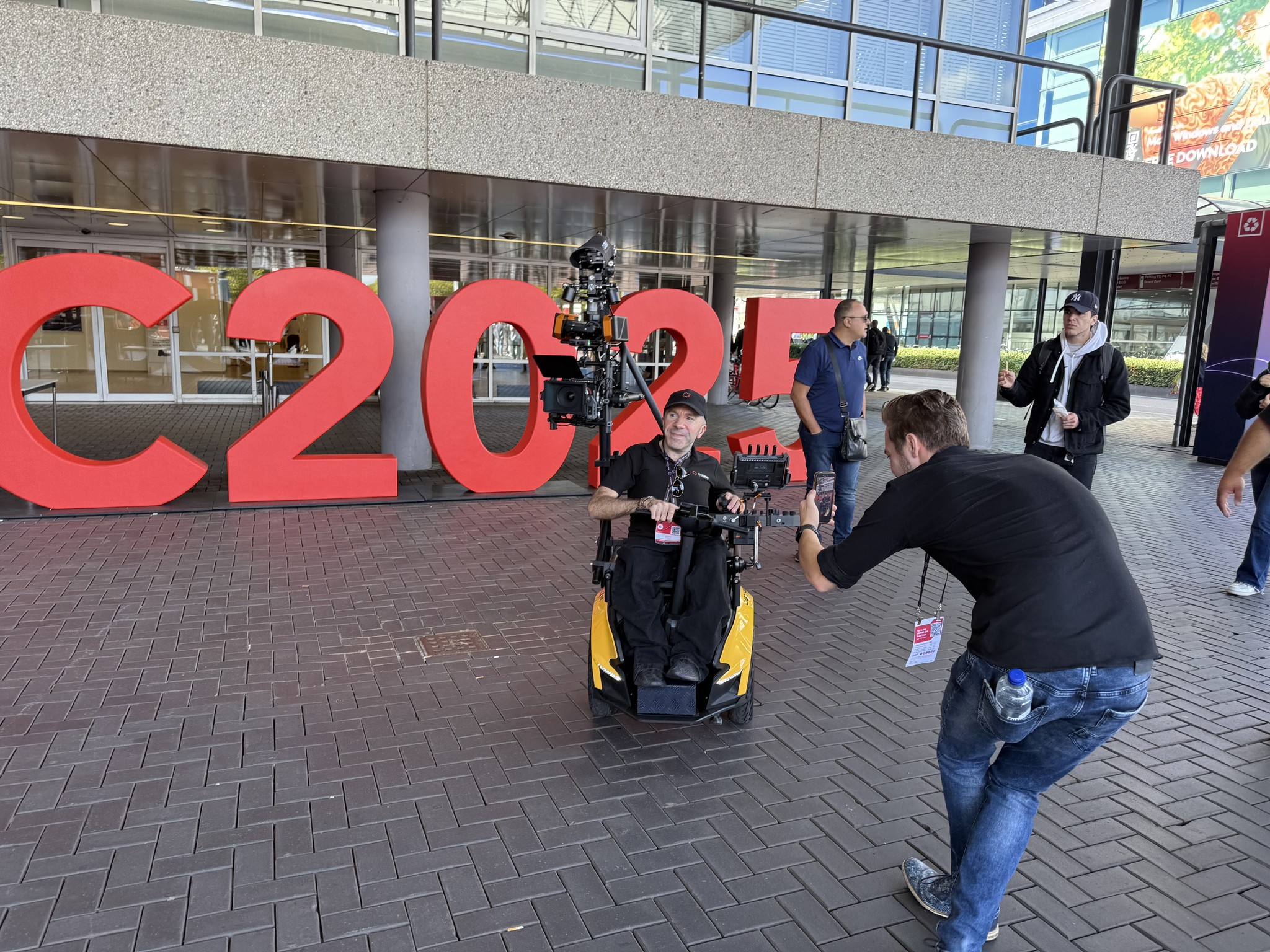
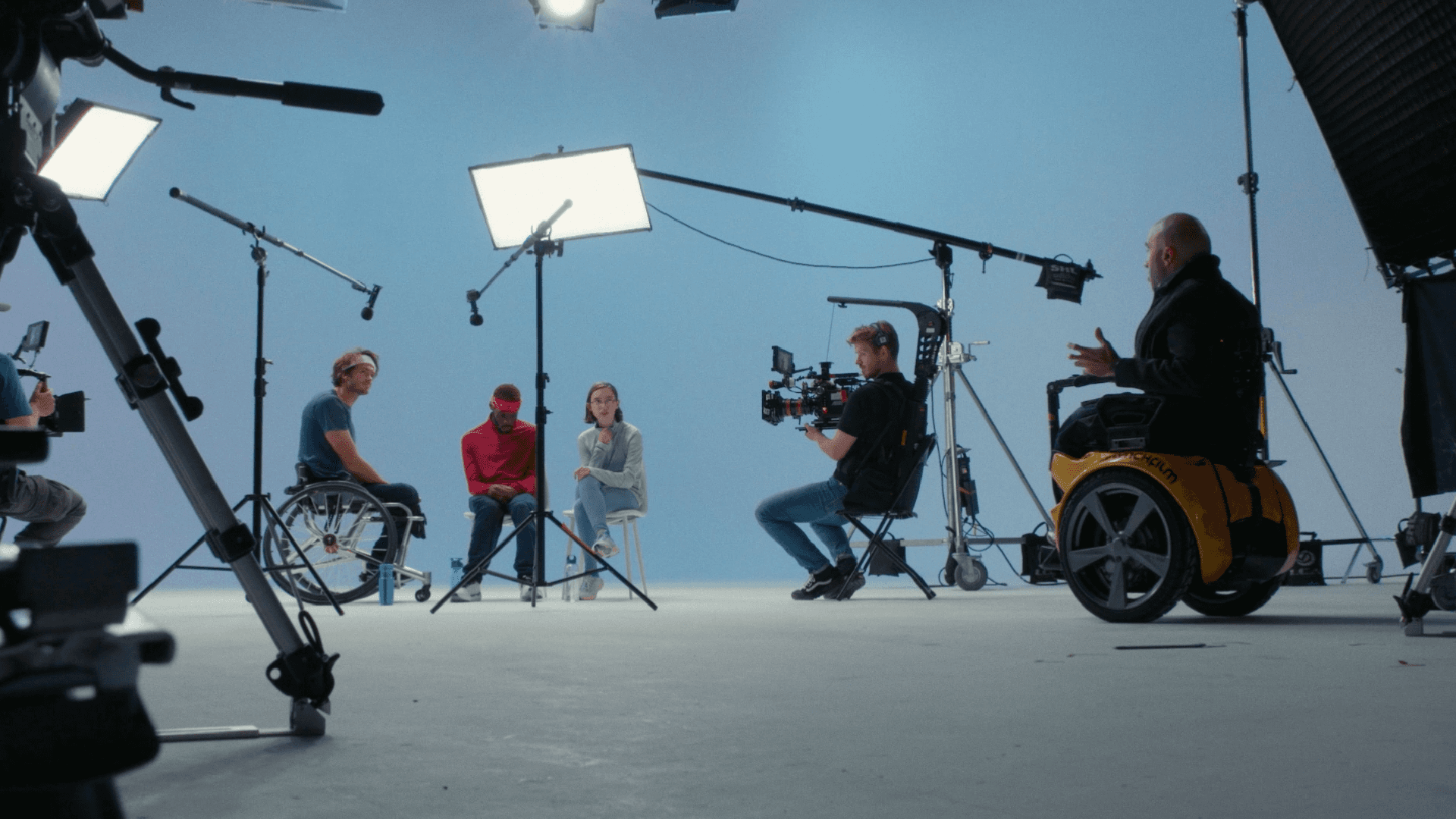
Five years of development. Multiple prototypes. One global launch that changed the conversation. CAERUS debuted at IBC 2025—one of the world's largest media and broadcast shows—introducing the world's first wheelchair-based camera system. Mechanically and electronically stabilised with speeds up to 20kmph, this isn't assistive technology disguised as innovation; it's a genuine creative tool that expands what's possible for every production.
Scroll to explore
Scroll to explore
About the project
CAERUS represents a fundamental shift in how camera movement is captured. The world's first wheelchair-based camera system delivers shots that would traditionally require Steadicam, dolly track, or specialised rigs, but with greater versatility, lower operator fatigue, and seamless integration into existing production workflows.
What sets CAERUS apart:
The technology emerged from a simple frustration: as a wheelchair user and cinematographer, Chris Lynch faced barriers that had nothing to do with creative vision and everything to do with equipment designed for standing operators. Rather than accepting limitation, CAERUS became the solution: a professional camera mounting system that turns a wheelchair into a precision camera platform.
Technical capabilities:
Mechanically and electronically stabilised with 3-stage image stabilisation
6km wireless range for flexible operation across locations
Payload capacity up to 10kg (Vista) or 13kg (Studio model)
Speeds up to 20kmph with no Z-axis movement on flat ground
25km operating range with swappable battery system
Flexible operation – single, dual, or triple operator configurations
Creative advantages:
Instant dolly, tracking, and orbit shots – no lengthy setup times
Extended operating time – payload distributed on chair, not operator
First-person perspective that puts viewers directly into the action
Smooth, dynamic movement comparable to Steadicam or gimbal shots
Broadcast-quality output proven on BBC productions and international events
Commercial validation came quickly. Following the IBC 2025 launch, CAERUS secured exclusive partnership with Ottobock (bringing medical-grade engineering to creative applications), gained international distribution through Tilta, and demonstrated real-world capability on productions ranging from BBC documentaries to Paralympic coverage.
But the breakthrough isn't just technical, it's philosophical. CAERUS proves that tools designed for accessibility can expand creative options for everyone, not just disabled operators. Productions book CAERUS because it delivers shots they want, not because it ticks a diversity box.
Development partners include: Genny, DJI, Feral Equipment, Ronford Baker, RED, CVP, Tilta.
Watch our filming 'Building CAERUS'
Watch our filming 'Building CAERUS'
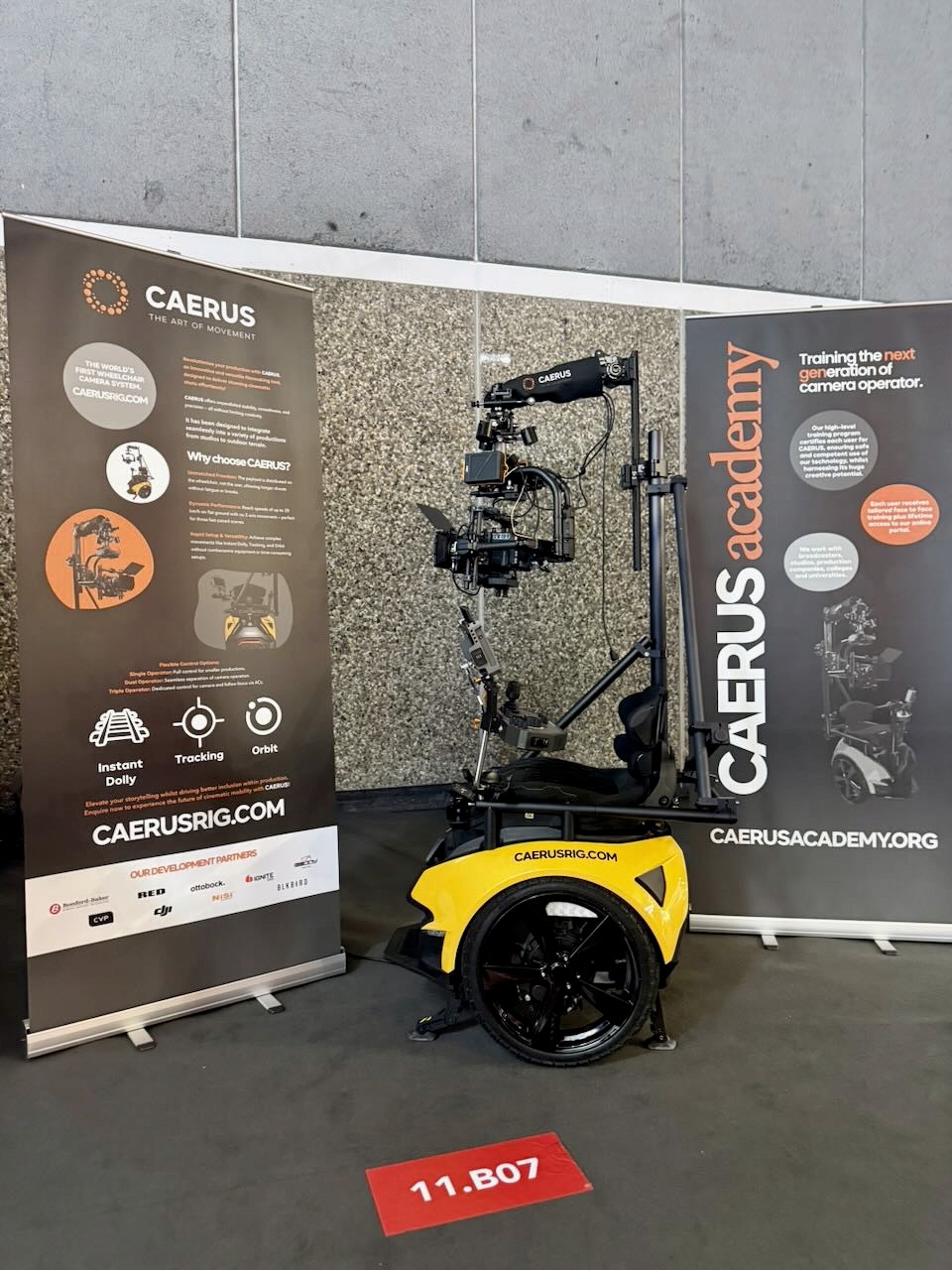
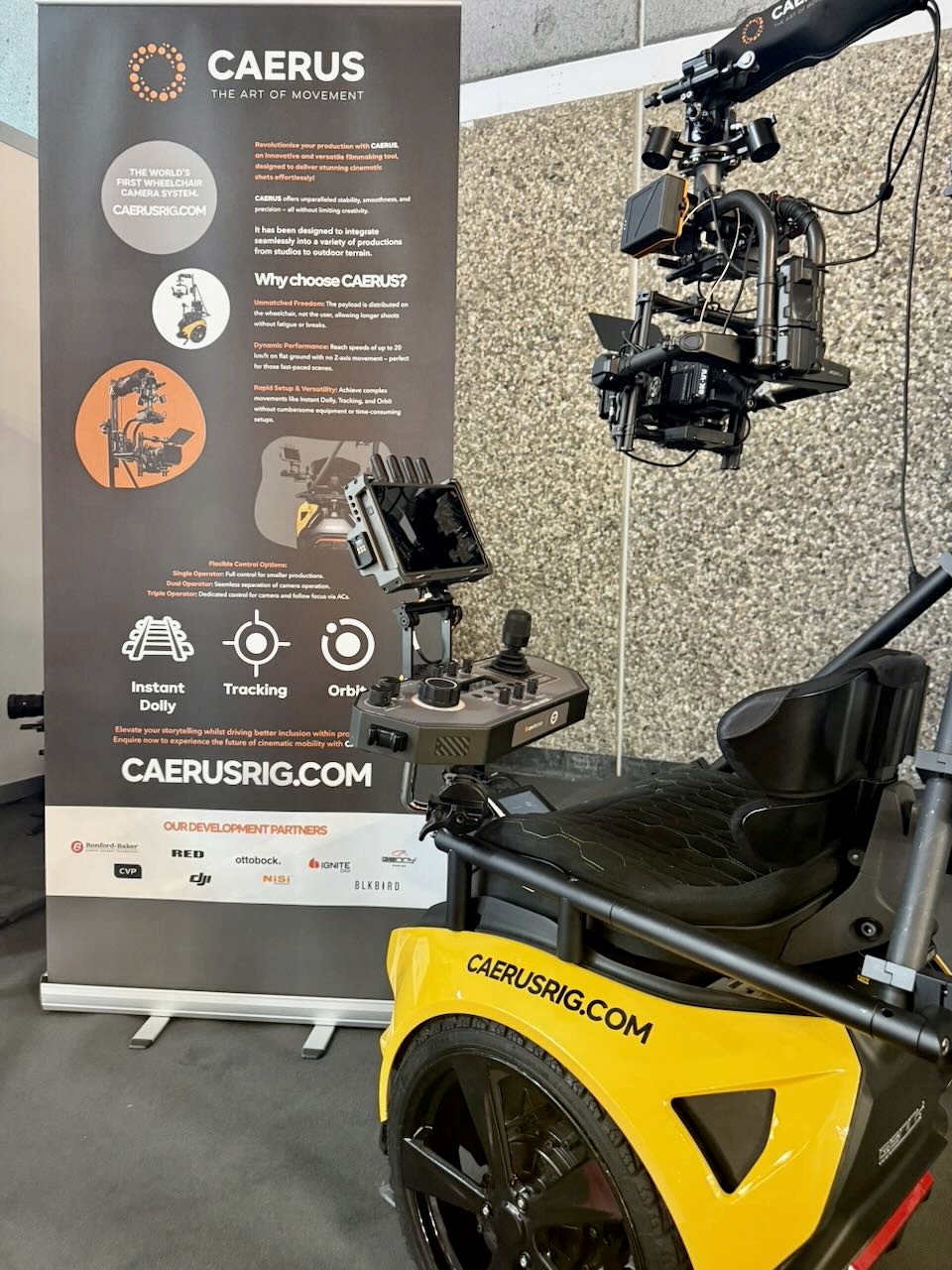
The Launch
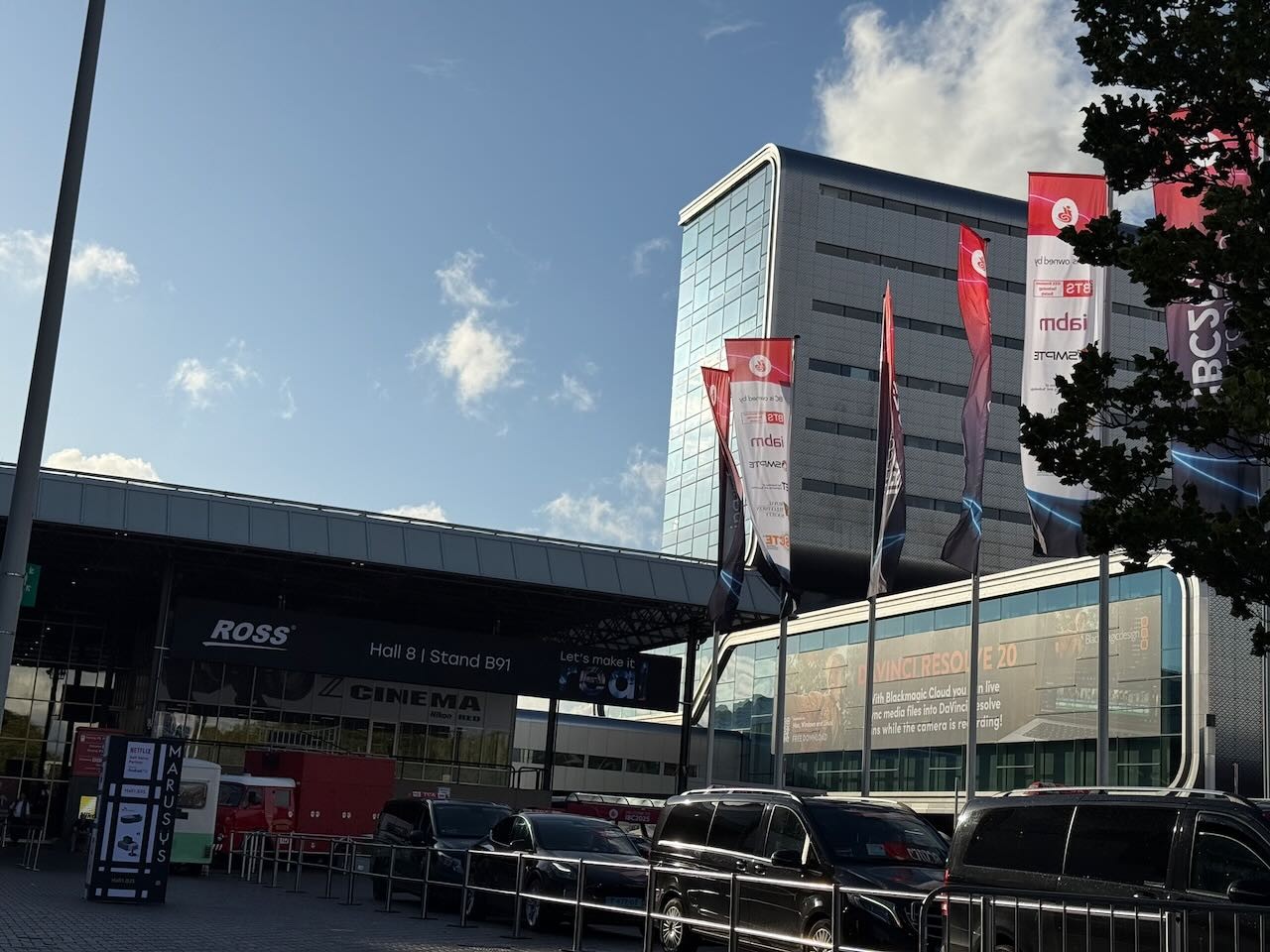
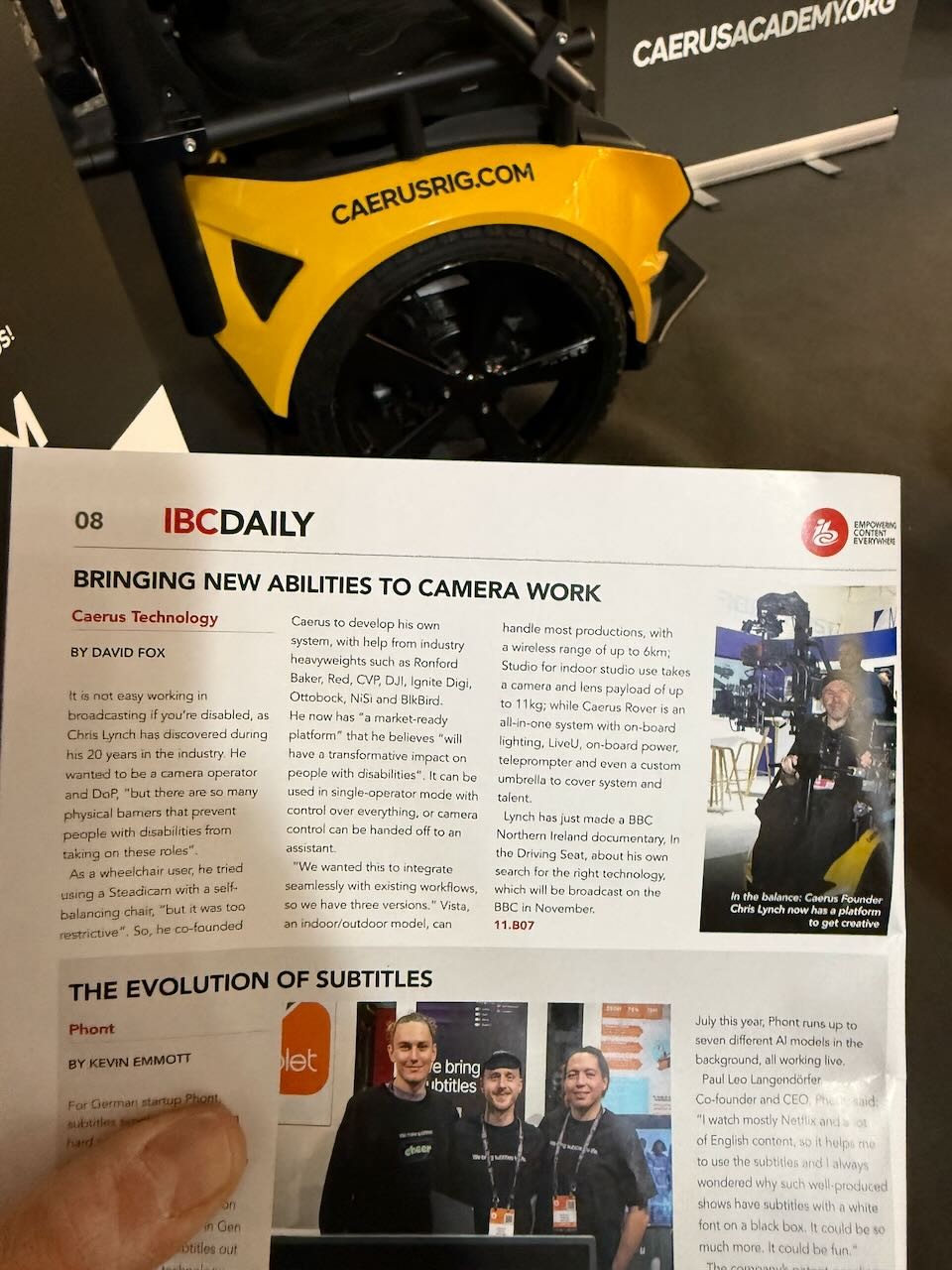
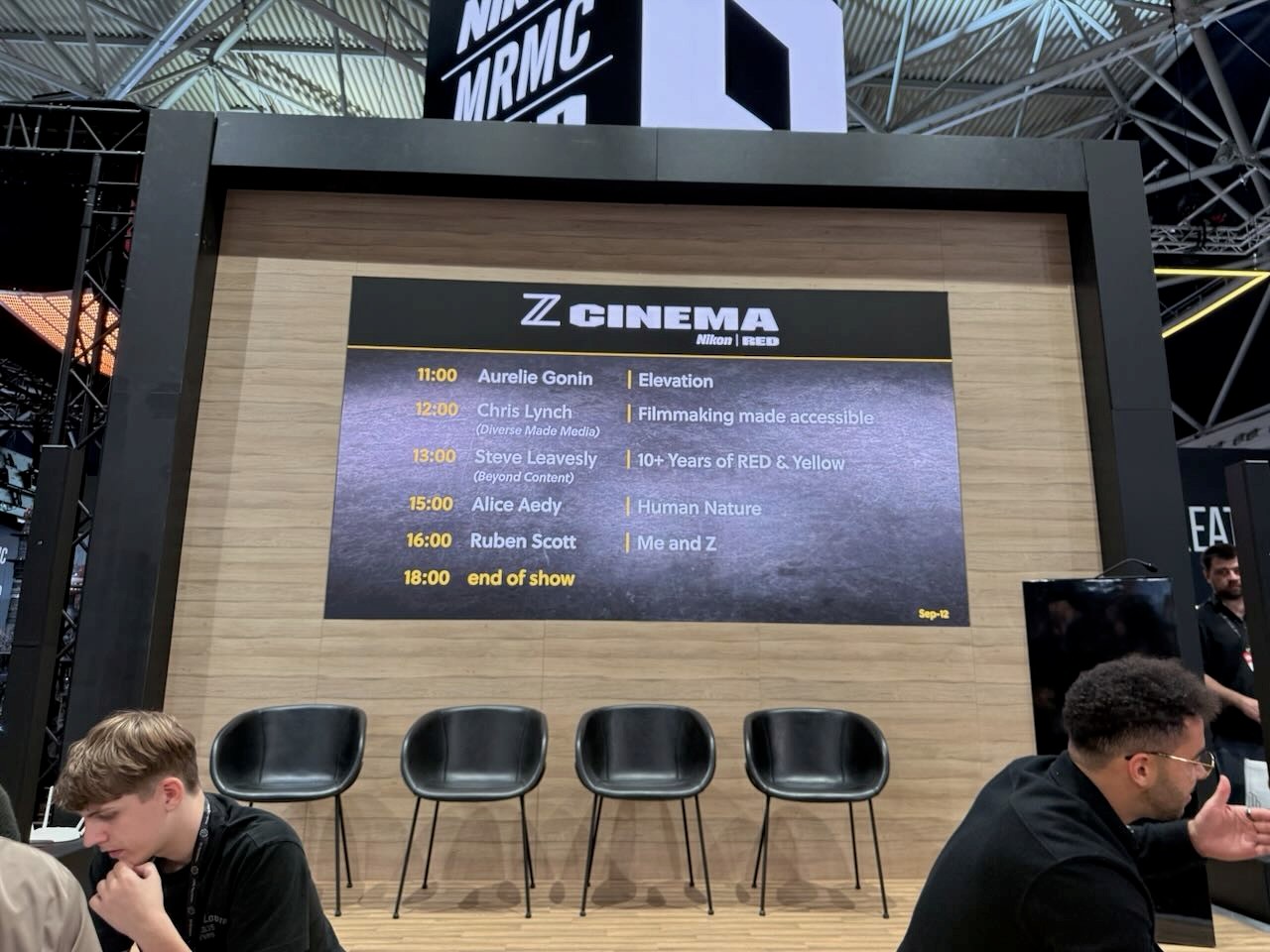
IBC 2025 in Amsterdam provided the perfect stage. As one of the broadcast industry's flagship events, it drew thousands of cinematographers, producers, and equipment manufacturers, exactly the audience CAERUS needed to reach. The response exceeded expectations. Industry professionals stopped to see the technology in action, press coverage appeared in IBC Daily magazine, and Chris presented a fireside chat on the RED Stage about inclusive filmmaking. More importantly, the conversations that followed weren't about disability, they were about creative capability, shot possibilities, and commercial applications. The launch validated what five years of development had proven: CAERUS works. And when technology works, the market pays attention regardless of the backstory.
DISCOVER MORE
Want to check more?
Discover our other projects.


Contact
Reach out today to setup a call to discuss how CAERUS can integrate into your next production.